
Shifting Skies: The Impact of Climate Change on Bird Migration and Conservation

By: Lanier Nelson
Migration is widely understood as an adaptation that evolved in part to avoid resource depression, allowing species to exploit seasonal food availability across different regions. However, migration is not purely beneficial. It requires significant energy expenditure and exposes animals to heightened risks, including predation, storms, and habitat unpredictability. As climate change accelerates, the costs associated with migration have increased, particularly for long-distance migratory birds.
A notable example is the Spoon-billed Sandpiper (Calidris pygmaea), a critically endangered shorebird whose population has sharply declined over the past few decades. The Spoon-billed Sandpiper breeds in northeastern Russia and migrates through East and Southeast Asia to wintering grounds further south. Its survival depends heavily on the availability of intertidal habitats along the East Asian-Australasian Flyway, which provide feeding and resting sites during migration. Much of the species’ population decline in the 2000s has been attributed to mortality during migration, particularly among juvenile birds. Juveniles are more vulnerable because they have less experience navigating long-distance routes and fewer energy reserves to recover from missed feeding opportunities. When stopover sites are degraded or inaccessible, young birds may be unable to complete migration successfully.
One of the most significant wintering areas for Spoon-billed Sandpipers is the Gulf of Mottama in Myanmar, an extensive intertidal mudflat system that supports migratory shorebirds across the region. Scientific research suggests that this site has historically supported approximately 60% of the global Spoon-billed Sandpiper wintering population, meaning that habitat disruption in this single region can have disproportionate effects on the entire species. This type of geographic concentration creates a conservation vulnerability. When a large portion of the population depends on a limited number of sites, any environmental degradation, coastal development, or climate-driven habitat shift can rapidly reduce survivorship and breeding success.

Alongside climate change, another direct threat to Spoon-billed Sandpipers is large-scale coastal reclamation. Reclamation converts mudflats and wetlands into agricultural, industrial, or urban land, effectively removing essential feeding habitat from the flyway network. The Spoon-billed Sandpiper depends on a chain of stopover sites, particularly around the Yellow Sea region, which historically have served as an important migration bottleneck for shorebirds traveling through East Asia. Major reclamation projects have eliminated substantial portions of these intertidal ecosystems. A prominent example is the Saemangeum reclamation project in the Republic of Korea, which involved reclaiming approximately 400 square kilometers of tidal flats. Although the precise population impacts differ across studies and species, the broader pattern is clear. The loss of mudflat habitat forces birds to either crowd into remaining feeding sites, increasing competition, or attempt longer flights to alternative locations. When birds cannot locate adequate feeding habitat, they may continue flying until exhaustion, leading to death from energy depletion.
Climate change affects more than habitat availability; it also alters the timing of migration. Research has found that climate change can alter migration timing and create mismatches in food availability between breeding and wintering environments. For species already under physiological stress, these mismatches can have severe consequences. Many birds living in extreme environments operate near their maximum tolerance thresholds, meaning that even more environmental change may push them beyond their capacity to survive or reproduce.
The Spoon-billed Sandpiper’s decline reflects a broader conservation crisis affecting migratory shorebirds along the East Asian-Australasian Flyway. The EAAF is one of nine major global flyways and stretches from breeding grounds in Eastern Russia through East and Southeast Asia into Australia and New Zealand. Several international and domestic frameworks exist to address threats to migratory waterbirds. The East Asian-Australasian Flyway Partnership (EEAFP), established in 2006, is a voluntary cooperative initiative involving migratory waterbirds, their habitats, and dependent communities.
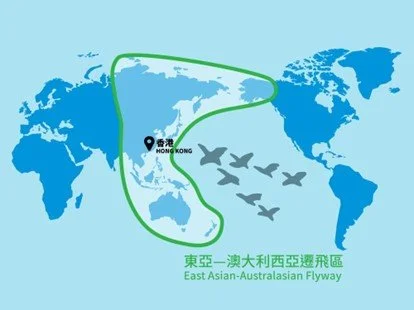
A central component of the EAAFP is the Flyway Site Network, which identifies internationally important wetland sites and encourages cooperative management among site managers and governments. Additional legal and policy frameworks include the Ramsar Convention on Wetlands, which promotes the conservation and “wise use” of wetlands worldwide. Several bilateral migratory bird agreements also support conservation obligations, such as Australia’s formal migratory bird agreements with Japan (JAMBA), China (CAMBA), and the Republic of Korea (ROKAMBA). While these frameworks represent meaningful conservation tools, their effectiveness varies significantly. Voluntary partnerships can promote collaboration, but they often lack the enforcement power to ensure compliance. Likewise, treaty obligations may be undermined when development priorities outweigh conservation objectives. Recently, Australia reformed its national environmental law to advance conservation objectives and impose stricter assessment of land development by removing certain exemptions that cleared land for development and contributed to habitat loss. Additionally, Australian regulatory and compliance officers have met with land managers to educate them and ensure compliance with the new rules.
The Spoon-billed Sandpiper illustrates how climate change and habitat destruction can dramatically increase the cost of migration. Rising sea levels, shrinking shorelines, and shifting environmental conditions reduce food availability and increase mortality risk, particularly for juvenile birds. At the same time, reclamation of intertidal mudflats continues to eliminate essential stopover habitat across the flyway. Because migratory birds depend on a continuous chain of suitable feeding sites, habitat loss in a single region can destabilize population survival across the entire migration route. Without stronger conservation measures and sustained international coordination, the continued degradation of intertidal ecosystems threatens not only the Spoon-billed Sandpiper but numerous migratory species that rely on the East Asian-Australasian Flyway.