
Trouble at Sea
By: Noah Weiser
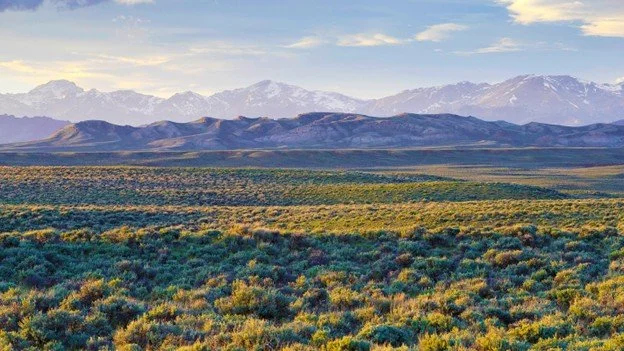
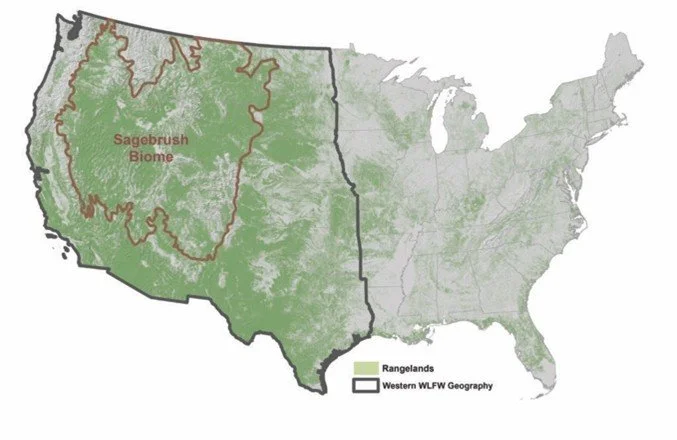
While it may not look like much, the Sagebrush Sea, covers about one-third of the land mass of the contiguous United States. This includes eastern Washington, Oregon, and California, Montana, Wyoming, Colorado, Utah, and Nevada as well as most of Idaho, the northern parts of Arizona, New Mexico, and Texas, and the western edges of North Dakota, South Dakota, and Nebraska. This biome also stretches up north to the Canadian provinces of Manitoba, Alberta, and Saskatchewan. The Sagebrush Sea serves as habitat for over 350 species, and it is crucial for regulating the environment in the West. The sagebrush habitat is home to pygmy rabbits, burrowing owls, bison, elk, mule deer, pronghorn, sage grouse, and countless other iconic species synonymous with the American West. Countless plant and animal species have evolved to rely on each other including species of plants that have evolved to live under and amongst the sagebrush.
The Sagebrush Sea is a complex habitat that is much more fragile than it appears.
This landscape with endless sky is under severe threat. Less than half of the original sagebrush territory exists today. If the sagebrush disappears, ranchers will go out of business, farmers will lose water, wildfires will become more intense and more frequent, and soil erosion will become more severe.
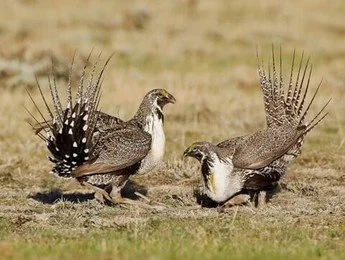
Today, roughly 100 million acres of sagebrush territory are considered moderately or highly threatened because of cheatgrass. Cheatgrass, native to Europe, southwestern Asia, and Africa is now taking over the landscape. The reason cheatgrass is so dangerous is because it can easily out-compete native plant species for limited resources. This plant species grows faster than native species, grows earlier in the season and dies out by late summer. Cheatgrass also reduces quantity and quality of livestock forage, and thrives in areas disturbed by development, and drought. Cheatgrass increases wildfire frequency, duration, and scope compared to native species. Many species, including the sage grouse, have developed to rely on the sagebrush for food and shelter. Sage grouse will eat sagebrush leaves in winter and shelter their chicks amongst its branches in the spring. However, the sage grouse cannot eat cheatgrass as it serves as poor shelter for its chicks, exposing them to predators and the elements.
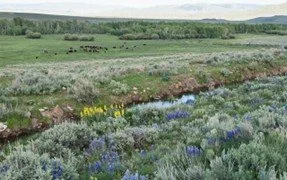
While cheatgrass may be nearly impossible to eradicate entirely, landowners and conservationists are working together to restore the sagebrush in other ways. One area under restoration are riparian ecosystems. While aquatic habitats cover less than twenty percent of the landscape, they support about eighty percent of its wildlife. Moose, elk, and deer rely on these wetlands as nurseries and vulnerable amphibians, such as northern leopard frog, need them for their life cycle. People too, depend on these wetlands to recharge groundwater, serve as buffers against drought and wildfire, and sustain livestock. Crews are working to restore these habitats. Restoration teams are using natural materials including willow branches, tree trunks, rocks, and mud to mimic beaver dams. This work helps reconnect floodplains, strength sources of water, and rebuild wetlands for different species. Riparian restoration can keep nearby areas cooler and makes them more resilient against rising temperatures and wildfires.
Land use is also becoming reformed. Some ranchers are testing out virtual fences to control where their livestock grazes. This is a new technology in which cattle are fitted with GPS collars and farmers can guide them to different grazing areas through beeps and benign shocks. Cattle have learned and respond very quickly to the auditory cues. Sheep and goats have had success with these collars as well. Virtual fences can help farmers and landowners restore their land, keep livestock away from wildfires, and help ranches practice managed grazing, which will improve soil and water quality. While virtual fencing is a new and expensive technology has proven effect at keeping cattle out riparian areas and areas with regenerating saplings. Less physical fences will also improve the health of sagebrush ecosystem because it will cause less interference with migrating herds and reduce human’s construction footprint.
Another effective tool for protecting the land outright are conservation easements. These are a powerful tool that provide for permanent protection of private lands in the United States. An easement is a voluntary agreement by a landowner that prevents development on their land and protects the natural value of their land as well.
It is too soon to tell what will happen to the Sagebrush Sea, but with dedicated teams working to restore the landscape, hopefully they can stave off the spread of invasive species for as long as possible. Other remedies such as riparian restoration, easements, and livestock control may be just enough to protect what is left of this unique landscape.