
Extreme Weather Fears Grow as World Approaches Paris Agreement Temperature Threshold
By: Lucas Shafran
In 2015, nations around the world celebrated the adoption of the Paris Agreement wherein over 190 parties committed to limiting their greenhouse gas (GHG) emissions to prevent the most severe effects of climate change. The treaty encouraged signatories to impose voluntary cuts to their GHG emissions, ensuring global warming remained limited to 1.5ºC above pre-industrial levels, and explicitly stated global GHG emissions would have to be reduced by 60% before 2035.
Unfortunately, the Paris Agreement has failed to fulfill its promise; emissions of GHG were 11.53% higher in 2025 than they were in 2015, and the only year with a reduction in emissions was 2020, when economic activity was stifled due to the COVID-19 pandemic. Over 60% of global GHG emissions come from six parties: China, the United States, India, the European Union, Russia, and Indonesia. Of these parties, only the United States, who has left the agreement twice, and the European Union have made modest reductions in emissions since 2015, while the rest have increased greatly in spite of their pledges to cut emissions. This unfortunate disregard for the environment and continued global prioritization of economic growth over sustainability led the United Nations Environment Programme (UNEP) to bleakly report that the world will cross the 1.5ºC threshold, and face significantly more destructive weather in coming years.
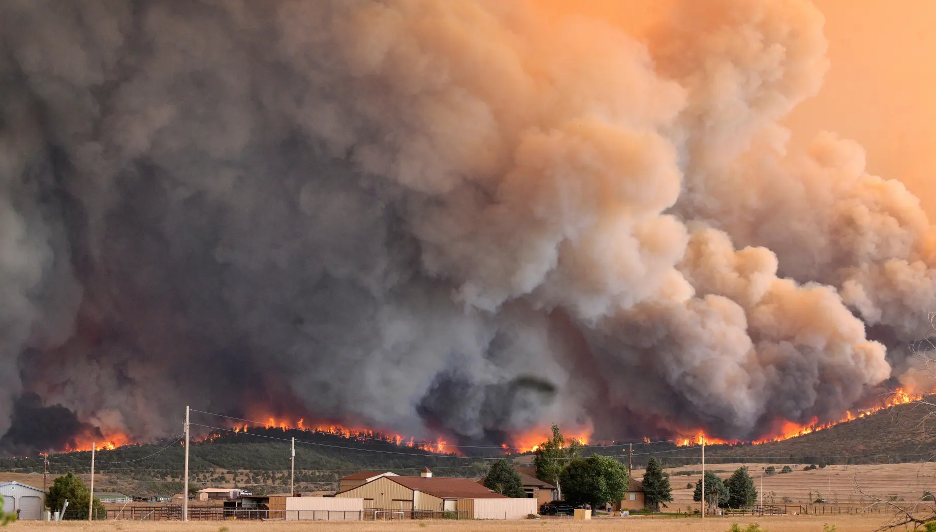
The increase in dramatic weather has already taken hold in the United States. August 2026 tied July 2023 as the hottest month on record for the Lower 48 states in 132 years of record-keeping, and in mid-August 74% of the contiguous United States was categorized as experiencing “anomalous dry conditions,” while nearly half of the same area faced moderate to exceptional drought. The combined effects of abnormally high temperatures and low amounts of precipitation have brought waves of anxiety across the nation; a Gallup poll found 74% of respondents in the drought-stricken Mountain West were worried about facing damage from adverse effects of extreme weather in the next year, the highest of any census division. Hot and dry conditions across the country have contributed to the most expansive wildfire season of the past ten years with over 54,000 fires burning 8.4 million acres of land nationwide. In Colorado, four of the five largest wildfires in history have occurred in the last six years, and eleven of the top twenty have occurred in the last eight years. As the climate continues to warm, it is all but certain that wildfires will continue to become more frequent and release enormous amounts of emissions, creating a positive feedback loop that will be difficult to overcome.
While climate change has caused instances where there is not enough water to avert disaster, it has similarly increased the occurrence of flooding and hurricanes. The atmosphere can hold 7% more water per every one degree Celsius increase in air temperature. There are already warnings of a record El Niño climate pattern, where waters in the Pacific Ocean are warmer than average and influence weather around the globe. This is likely to bring a wetter winter to the southern United States, and a warmer winter to the north. While there are hopes that a wet winter can help quash drought in the Southwest, there is also heightened risk of flash flooding as a result of the wildfire season. Due to a lack of vegetation that would normally absorb rainwater, and a layer of hydrophobic charred soil, landscapes that recently experienced wildfire are at elevated risk for flash flooding. Colorado has already begun to experience these floods, even before the super El Niño pattern peaks in strength; Ouray, Pueblo, and Custer Counties have all faced local flooding after burn scars were exposed to rainstorms. Regardless of whether an area currently experiences abnormally wet or abnormally dry conditions, it is abundantly clear that an increase in global temperatures has already led to an increase in weather extremes that cause significant and dangerous events.
Although UNEP’s Limiting Overshoot Spotlight Report did state that humanity has failed to curtail emissions prior to crossing 1.5ºC in warming, the report also outlined a path to prevent the most catastrophic outcomes. First, the report acknowledges that limiting peak temperature must remain a global priority, as any additional warming would result in even more dangerous weather and increase the likelihood of irreversible disasters, such as the shutdown of the Gulf Stream. Without intervention, the report estimates a 2.6ºC increase in temperatures above pre-industrial benchmarks, but UNEP still believes humanity can overshoot the 1.5ºC target, before reeling in temperatures. Current trends in global warming and GHG emissions present a ghastly future and greatly increase the need to act on climate now, but they do not change the proven solutions humanity has at its disposal to make progress on climate change. Massive investment in carbon-free power generation, electrification of transportation, regenerative agriculture, and continued development of carbon dioxide removal are still the building blocks to a sustainable future. While the Paris Agreement has hardly prevented the world from reaching 1.5ºC in warming, it still holds the key to preventing a worst case scenario through robust and imaginative international cooperation and investment in proven solutions.